Business owners often compare filmed video and motion graphics as if one must replace the other. The better question is what the audience needs to understand, trust or do next. Appjad helps companies choose the production route according to the message, proof available, distribution channel and decision the asset must support.
Key takeaways
- Choose filmed video when people, places or physical proof carry the message.
- Choose motion graphics when the value lies in explanation, comparison or process.
- Use the buying decision and distribution channel to define the format.
- Design the asset as a reusable marketing tool, not a one-time production.
The right format is the one that makes the buyer’s next decision easier.
Approach one: filmed video for trust and tangible proof
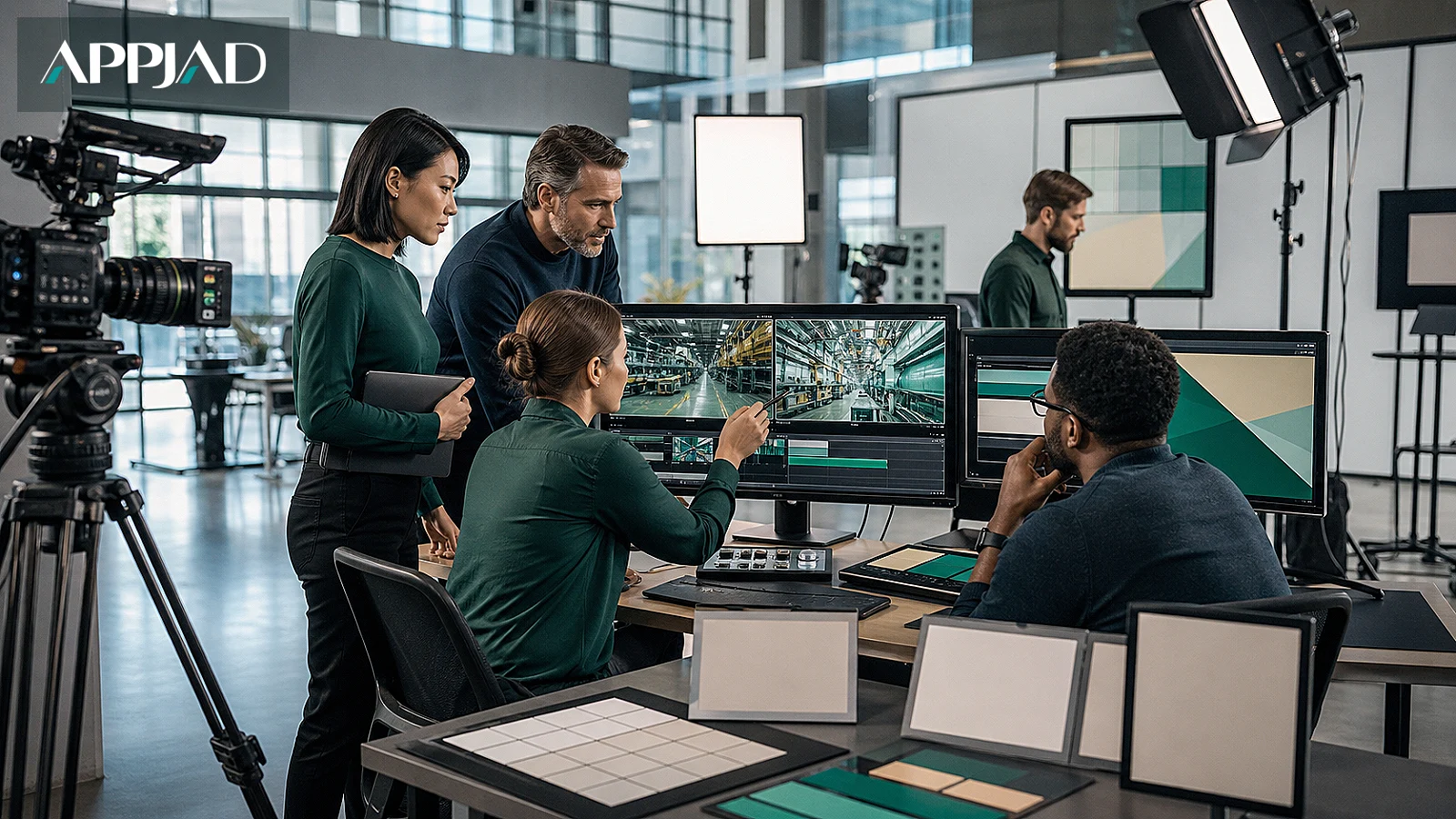
Filmed video works best when the audience needs to see reality: a specialist explaining a service, a facility in operation, a product being used or a team demonstrating how work is done. Movement, voice, facial expression and physical detail can answer doubts that text or illustration may leave unresolved.
This approach fits companies with credible people, useful locations or a visible customer experience. A clinic may show how a consultation feels; a manufacturer may demonstrate quality controls; a hospitality business may let viewers experience the space before contacting the team.
- Use an expert interview when judgment and experience matter.
- Use a demonstration when the product or service has a visible process.
- Use location footage when atmosphere, scale or access affects the decision.
Before filming, identify the proof the viewer needs. A polished sequence without evidence may attract attention but still leave the buyer uncertain.
Approach two: motion graphics for clarity and controlled explanation
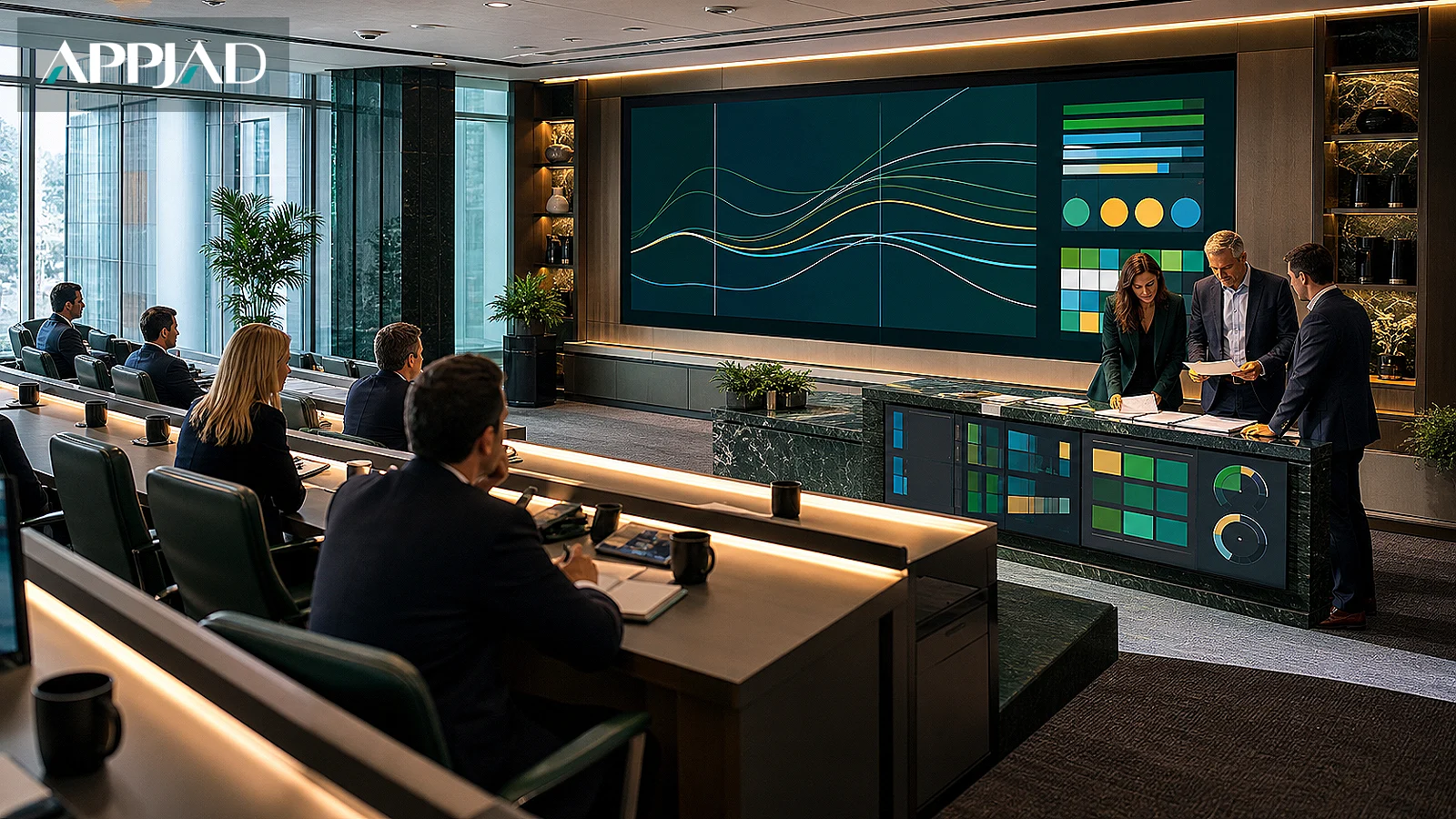
Motion graphics are often the stronger choice when the subject is abstract, technical, data-led or difficult to film. Animation can show a workflow, reveal how systems connect, compare options, explain a service model or turn a complicated benefit into a sequence the viewer can follow.
This route fits software companies, professional services, financial products, operational platforms and businesses whose value is created behind the scenes. It also helps when the company has limited usable footage, operates across several locations or needs the same explanation in different languages and formats.
Start with one question the animation must answer. Then arrange the explanation in a simple order:
- State the business problem in language the buyer recognises.
- Show the cause, process or solution without unnecessary technical detail.
- Connect the solution to a practical outcome.
- End with one clear action, such as requesting a consultation or viewing a relevant page.
Motion graphics should clarify a decision, not decorate a weak message. Appjad can support this work through video and motion graphics planned around the business objective.
Compare the two routes by the decision involved
The format should follow the type of confidence the customer needs. If the customer is asking, “Can I trust these people, place or product?”, filmed video usually provides stronger evidence. If the customer is asking, “How does this work, and why should I care?”, motion graphics may create a cleaner path to understanding.
Use this practical comparison before commissioning production:
- Proof of reality: choose filming for people, premises, products and demonstrations.
- Proof of logic: choose motion graphics for workflows, systems, concepts and comparisons.
- Emotional connection: filming gives natural human presence; animation gives tighter control over tone and pacing.
- Message flexibility: motion graphics are easier to revise when facts or interfaces change.
- Audience context: filmed footage can support local trust, while animation can simplify a complex offer for a wider market.
Some campaigns need both. A filmed expert can establish credibility, followed by animation that explains the service. The combination is useful when trust and comprehension are separate barriers.
Match the asset to the channel and attention level
A video made for a website page may not work as a social advertisement. Website visitors may accept a longer explanation after showing interest, while people scrolling through a feed need the subject and relevance immediately. The same core idea may therefore require different openings, lengths, captions and calls to action.
Choose the distribution plan before production begins. Decide where the asset will appear, what the viewer already knows and what action is available at that point. Then prepare versions that respect the channel rather than simply cropping one master file.
- Write the first message for silent viewing, using captions or clear on-screen text.
- Place the business problem early instead of beginning with a long logo animation.
- Keep one primary action per version.
- Check that the landing page or contact route delivers what the video promised.
When paid reach is involved, connect the creative to a controlled campaign structure. Appjad’s ad campaigns service can help align the asset, audience, placement and follow-up action.
Build a reusable asset instead of a single finished file
Owners should ask what the production will produce beyond the main video. A useful project may include a full explanation, short edits, vertical versions, still frames, caption files, animated sections and cut-downs for sales conversations. Planning these outputs early is cheaper and more coherent than trying to extract them after delivery.
Create a short production brief containing:
- The audience and decision the asset supports.
- The one message that must remain true in every version.
- Required formats, languages, captions and approval owners.
- Evidence, claims and brand elements that may be used.
- The destination for the viewer after watching.
Review the first script or storyboard against these requirements before approving production. For broader visual consistency across channels, see one visual system across channels. Appjad treats production as part of a working marketing system, not an isolated creative hand-off.
Frequently asked questions
Should a small company start with filmed video or motion graphics?
Start with the message that is hardest to communicate through existing material. If customers need to meet the team or see the work, film a focused proof piece; if they need a service explained, begin with a concise animation.
Can one video serve both sales and advertising?
It can provide the central message, but the opening and call to action may need adaptation. Build a master explanation and plan shorter versions for discovery, retargeting and direct sales conversations.
How do we judge whether the production was useful?
Agree the intended action before production, then review whether viewers reach the relevant page, request information or progress in the sales conversation. Also collect feedback from the people who use the asset with prospects.
Choose the route and plan the first asset
Write down the customer’s unanswered question, the proof available and the channel where the asset will work. If reality is the proof, film it; if the logic is the obstacle, explain it with motion graphics. Appjad can help define the brief, select the format and produce a marketing asset your team can use with purpose.