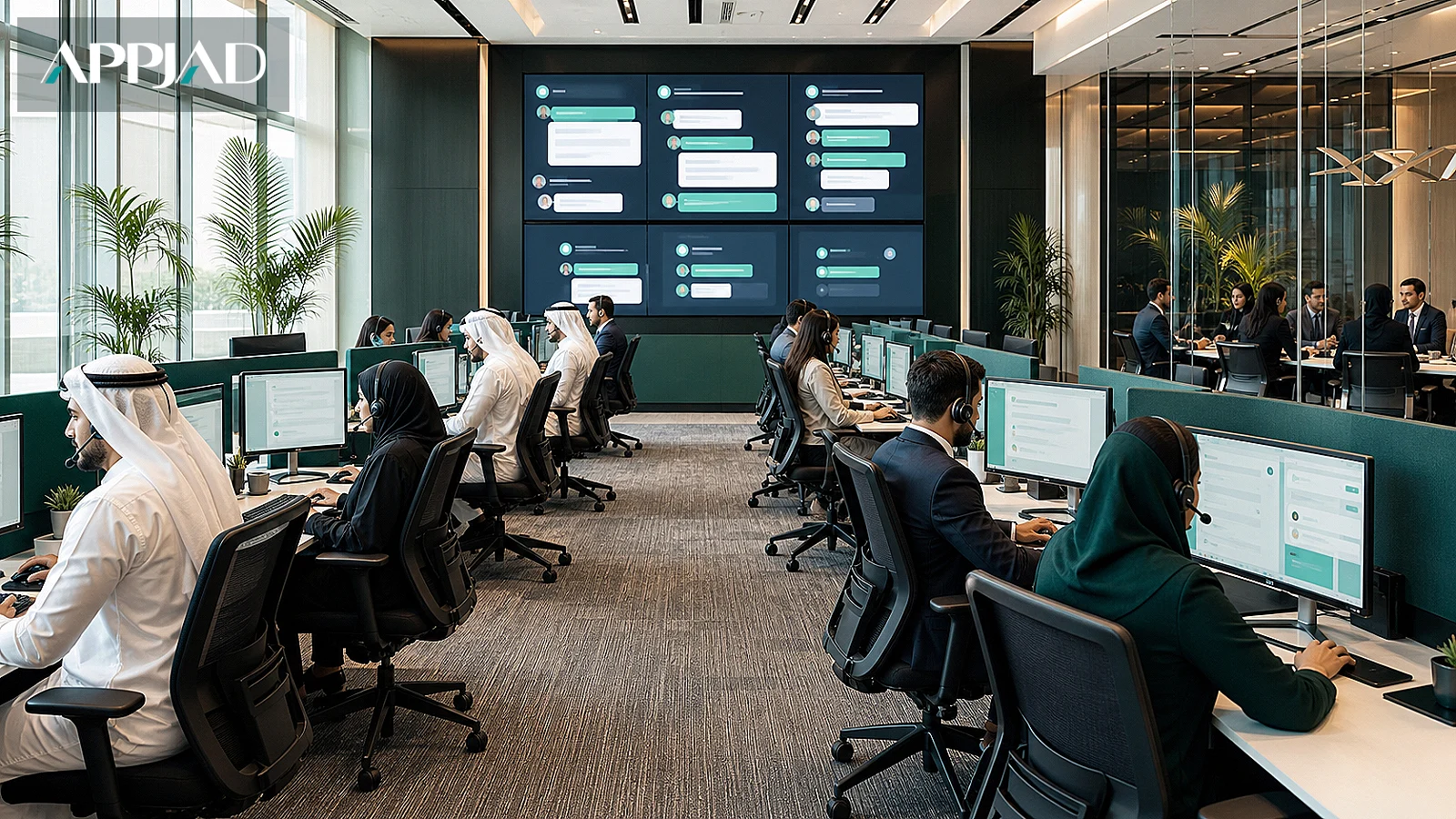
Most owners entering Gulf markets arrive with a set of assumptions about language, timing and how customers behave. Some are useful. Many are inherited from elsewhere and quietly cost money. This piece separates the myths from the operating reality, and shows what to change in your service, your channels and your systems. Appjad (أبجد) works with companies across Oman, the Gulf, Turkey, Iraq and Lebanon, and the pattern is consistent: the businesses that adapt their operations, not just their marketing, are the ones that keep customers.
Key takeaways
- Language is an operating decision, not a translation task.
- Response speed matters more than polished copy in most Gulf buying conversations.
- WhatsApp is a service channel with its own rules, not a second inbox.
- Adapt the workflow behind the customer, not only the message in front of them.
Myth: one Arabic version covers the whole Gulf
Owners often assume a single Arabic website or brochure serves every market. In practice, customers notice the difference between formal and conversational Arabic, between Gulf and other dialects, and between a text that was written and one that was translated. A Saudi buyer and an Omani buyer may read the same page differently.
The practical step is to decide, per market, which register you use and who writes it. Start with your highest-value pages: the homepage, the service description, the quote request and the complaint route. Have a native speaker in that market read them aloud and mark anything that sounds borrowed. Then keep a short glossary of product terms so your team, your agency and your salespeople use the same words.
This is where a proper website content system earns its place: one source of approved wording that every channel draws from, instead of five versions drifting apart.
Myth: customers want long relationships before they buy
The reality is more specific. Gulf buyers do value trust and personal contact, but they value a clear answer even more. A long relationship does not replace a price, a delivery date and a named person who responds. Many owners over-invest in hospitality and under-invest in the written follow-up that the customer actually needs to decide.
Try this sequence on your next ten enquiries:
- Reply within the same working day with a short summary of what you understood.
- State what you need from the customer to proceed, in one list.
- Send a written scope or quote with a validity date.
- Confirm the next contact date in writing.
Warmth and precision are not opposites. The companies that win repeat business combine both, and they document the conversation so the relationship survives a change of salesperson.
Myth: WhatsApp is informal, so it needs no rules
WhatsApp is often the primary channel for enquiries, quotes and after-sales in the Gulf. Owners treat it as informal and therefore unmanaged, which is where problems start: messages answered by whoever is free, quotes sent as voice notes, no record of what was promised.
Treat it as a service channel with defined ownership. Decide who answers, within what time, and what must move to email or a system. Use business profiles, saved replies for common questions and a simple log of commitments. If volume grows, connect the channel to a proper process rather than adding more phones.
Customers judge your company by the speed and clarity of the first reply, not by the size of your brand.
A structured WhatsApp and email setup keeps the channel fast without letting it become the place where accountability disappears.
Myth: the working week is the same everywhere
Gulf markets share a region but not an identical calendar. Weekend days, public holidays, Ramadan hours and summer travel patterns differ between countries and change over time. An owner who plans campaigns, deliveries and support rotas on a single calendar will miss customers at exactly the moment they are paying attention.
Build a market calendar before you plan anything else. For each country you serve, note the weekend, the main holidays, the reduced hours in Ramadan and the peak travel months. Then check three things against it: your support coverage, your delivery promises and your campaign timing. A launch that lands on a holiday weekend is not a marketing failure; it is a planning failure.
This is the same discipline described in building an operating rhythm before Gulf growth: the calendar is part of the operation, not an afterthought.
Myth: English is enough for business customers
Many B2B buyers in the Gulf do work in English. That does not mean English is enough. Contracts, proposals and support conversations often need Arabic, and a customer who receives a well-written Arabic document reads it as a signal of commitment. The reverse is also true: a clumsy translation signals that the market is secondary.
Set a simple language policy by document type. For example: proposals in both languages, contracts in Arabic with an English version, support in the customer's preferred language, internal notes in whichever language the team works fastest. Record each customer's preference in your CRM so nobody has to guess on the next call. Then test it: send a proposal in the customer's language and ask directly whether it was clearer.
Myth: culture is a training course, not a system
Cultural awareness matters, but it rarely survives as a one-day workshop. What survives is a system that makes the right behaviour easy: templates in the right language, response-time targets, a calendar that respects local holidays, and a CRM that records preferences.
Appjad approaches this as systems engineering rather than advice. We map how you actually sell and serve today, identify where the customer experience breaks, and design the workflow, channels and controls around it. That might mean a bilingual quote template, a WhatsApp routing rule, or a service dashboard that shows response times by market. The point is that good habits become the default, not a personal effort.
Owners who skip this step usually discover the gap months later, when a promising market produces complaints instead of repeat orders.
Frequently asked questions
Do we need a separate website for each Gulf country?
Usually not. One well-built site with clear market selection, local contact details and correct language versions serves most companies. Separate sites make sense only when the offer, pricing or regulation genuinely differs by country.
Should our team answer WhatsApp outside working hours?
Not necessarily, but the customer must know when to expect a reply. An automatic message stating working hours and the next response time is better than silence, and it protects your team from unclear expectations.
How do we know our Arabic content is good enough?
Have a native speaker from the target market review your key pages and read them aloud. If a sentence sounds translated or overly formal for the context, rewrite it. Keep the approved version in one place so every channel uses it.
Next step: audit one customer journey this week
Pick your most valuable customer journey, from first enquiry to repeat order. Walk through it as a customer in the market you care about most. Note where the language, the timing or the channel fails. Then fix one thing: a template, a response rule or a calendar entry.
If you want that work done properly, Appjad can map the journey, design the channels and build the systems behind them, so your Gulf customers get a consistent experience from the first message to the second order. Start with a short diagnostic conversation with شركة أبجد and decide what to change first.